

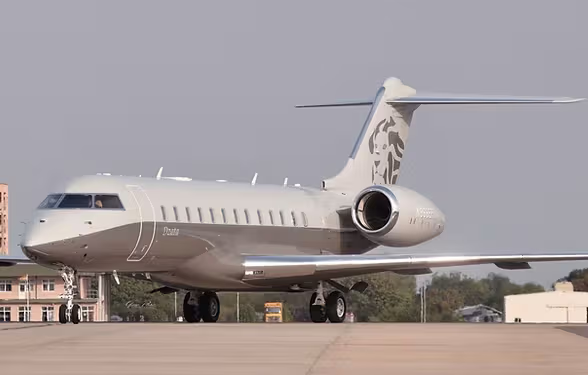
Callistus Mahama, the Secretary to the President, has disclosed that Ghana is anticipated to obtain more aircraft for presidential travel by November of this year, as part of initiatives aimed at enhancing the nation’s state aviation capabilities.
This announcement arises amidst public discussions regarding the utilization of a private aircraft owned by the brother of John Dramani Mahama for official presidential travel.
In an opinion article addressing the issue, Dr. Mahama recognized that the concerns regarding potential perceptions of a conflict of interest are valid and warrant careful consideration.
“This is a reasonable inquiry. In a democratic society, citizens not only have the right to pose such questions; they are obligated to do so,” he expressed, emphasizing that public oversight is crucial for sustaining trust in governance.
Dr. Mahama elaborated that the decisions surrounding presidential travel are frequently influenced by a mix of security needs, operational logistics, and the existing limitations of state aviation resources.
“Presidential travel is distinct from other types of travel. It entails numerous responsibilities—security protocols, diplomatic interactions, communication systems, and the necessity for the Head of State to continue functioning as the executive authority of the republic, even when thousands of kilometers away from Accra,” he remarked.
He pointed out that some of the aircraft historically utilized for government travel were not intended for long-distance diplomatic missions, while others encountered operational limitations.
To tackle these issues, he mentioned that the government has begun measures to enhance the presidential air transport fleet as part of a wider reformation of the Ghana Armed Forces.
“By November of this year, the nation is expected to incorporate additional aircraft into the presidential fleet, including one specifically designated for the President’s travel,” he indicated.
Dr. Mahama stated that this development will allow Ghana to depend entirely on state-owned resources for presidential travel, thereby removing the necessity for temporary arrangements that have sparked the ongoing public discussion.
He further emphasized that enhancing institutional capacity is crucial to the government’s wider initiatives aimed at restoring public confidence and advancing governance.


