

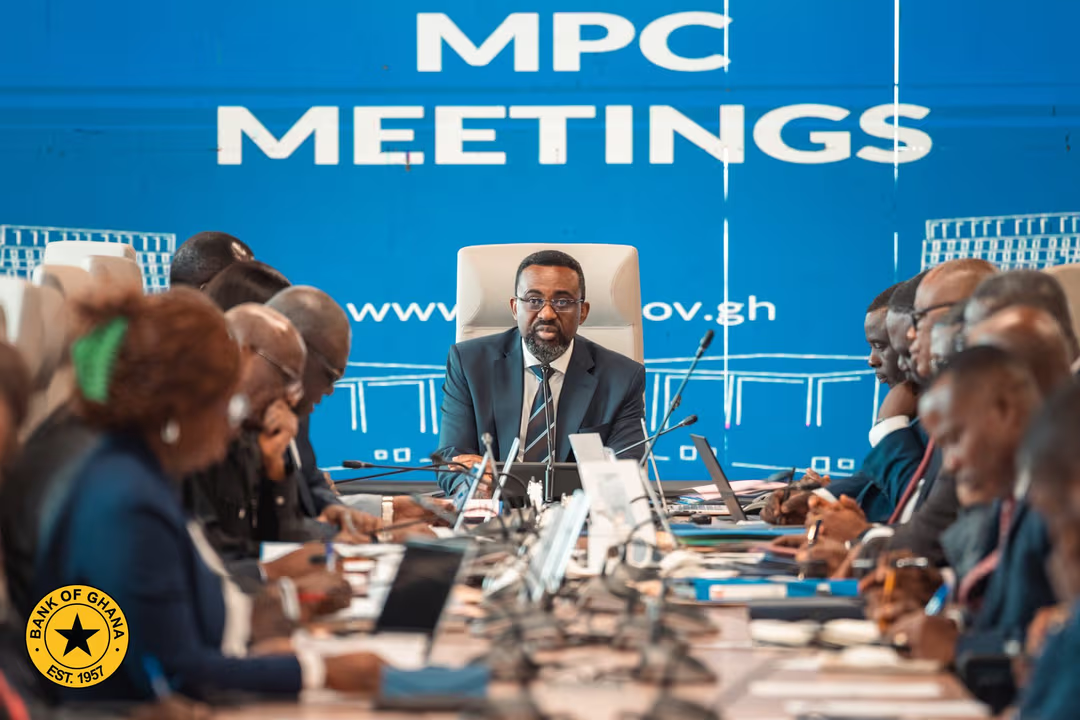
The Monetary Policy Committee (MPC) of the Bank of Ghana has initiated its 129th Regular Meeting today, Monday, March 16, 2026, which will continue until Wednesday, March 18, 2026.
The committee is poised to assess the recent developments in the economy.
The meetings will culminate in a press conference on Wednesday, March 18, 2026, where the Committee’s decision will be announced.
During the 128th Monetary Policy Committee meetings, which took place from January 26 to 28, 2026, the Committee, by a majority vote, decided to lower the Monetary Policy Rate (MPR) by 250 basis points to 15.5 percent.
One member of the MPC contended that global economic activity remained robust in 2025 and is anticipated to grow by 3.3 percent in 2026. Inflation has decreased across major economies, leading many central banks to adopt a more accommodative monetary policy.
Enhanced global financial conditions—bolstered by a weaker US dollar and reduced global yields—create a favorable environment, although risks persist due to geopolitical tensions, erratic tariff adjustments, and fluctuations in oil prices.
On the domestic front, macroeconomic conditions have continued to improve. Inflation fell for the twelfth consecutive month to 5.4 percent in December 2025, influenced by stable exchange rate conditions, better supply dynamics, and previous policy measures. Inflation expectations among consumers, businesses, financial market participants, and economic analysts have also diminished, reinforcing the trend of disinflation.
He remarked, “The external sector remains strong, supported by a significant current account surplus and robust foreign reserves, which contribute to the strong performance of the currency. Indicators from the real sector, including GDP trends, the Composite Index of Economic Activity (CIEA), the Purchasing Managers’ Index (PMI), and sentiment measures, indicate ongoing economic growth. Monetary and financial conditions are gradually returning to normal, with improving liquidity and early signs of recovery in private sector credit.
The risks associated with the inflation outlook are generally balanced. Potential upward pressures stemming from adjustments in utility tariffs, disruptions in agricultural supply, and fluctuations in global commodity prices are countered by downward risks linked to a robust currency, anticipated decreases in transport fares, and reductions in VAT and fuel prices. Short-term forecasts suggest that inflation will remain at or below the lower limit of the target range. In light of the persistent disinflation, stable expectations, and improved external fundamentals, maintaining the current level of monetary tightness may unnecessarily hinder economic activity and postpone credit recovery. The prevailing conditions allow for a gradual easing of the policy stance.
The economy has reached a point where disinflation is firmly established, expectations are solidly anchored, and external conditions are advantageous. A careful adjustment of the policy rate will assist in aligning real rates with the current inflation dynamics, bolster confidence, encourage credit growth, and support the ongoing economic recovery, all while keeping inflation within the medium-term target range. Consequently, I propose a reduction of the policy rate by 250 basis points to 15.5 percent, while reaffirming the Committee’s readiness to respond promptly should inflation risks arise.


