

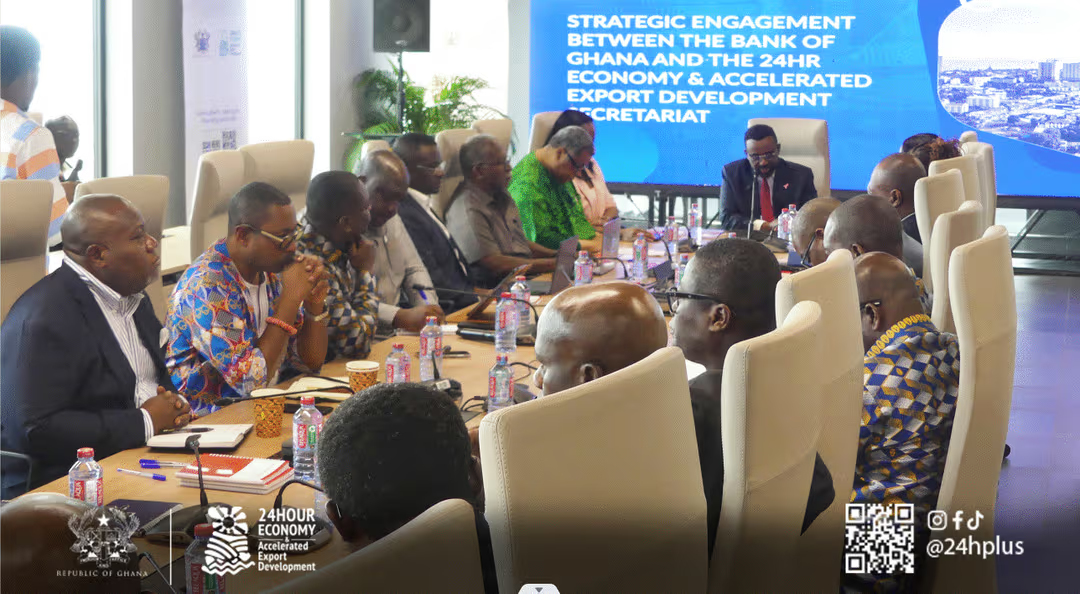
The 24-Hour Economy Secretariat convened a high-level meeting with the Bank of Ghana to ensure alignment of the flagship policy with the broader macroeconomic framework of the country.
This engagement is part of the Secretariat’s ongoing consultations with key stakeholders aimed at sharing details of the 24-hour economy policy, gathering institutional feedback, and establishing strategic partnerships for its implementation. The central bank is one of the latest institutions to be involved as the program moves into its operational phase.
Goosie Tanoh, the Presidential Advisor on the 24-Hour Economy Programme, expressed gratitude to the Bank for the opportunity to engage with its leadership and technical teams.
He emphasized that Ghana’s immediate focus is on building a resilient economy based on macroeconomic stability. He praised the Bank of Ghana for providing the necessary stability to create platforms for growth, expansion, and increased economic activity, which includes higher domestic production and export output.
Tanoh noted that the 24-hour economy initiative aims to enhance these achievements by offering a targeted micro-level response to the macroeconomic stabilization that has been accomplished. He referred to recent economic indicators as significant, highlighting sustained performance in treasury bills and a reduction in inflation as signs of a strengthening foundation for long-term growth.
A key topic of discussion was the proposed creation of a Food Security and Price Stabilisation Fund. This Fund is anticipated to help mitigate commodity price volatility, lower food inflation, and improve national food security, thereby complementing existing monetary policy measures.
The meeting also examined practical areas for collaboration between the Secretariat, commercial banks, and the central bank. Proposed initiatives included the formulation of a 24H+ credit policy and enterprise financing framework, coordinated assessment of credit applications, opportunities for syndicated and direct lending, and balance sheet support for qualifying 24-hour enterprises, contingent upon due diligence.
Further topics addressed include the acknowledgment of credit insurance programs aimed at bolstering collateral frameworks, regulatory aspects concerning 24-hour loan portfolios, foreign exchange hedging tools designed to facilitate SME lending at competitive rates, and digital platforms intended to broaden access to trade and finance.
It is anticipated that discussions with the Bank of Ghana will yield significant strategic regulatory policy initiatives that will improve the financial services infrastructure, enabling Ghanaian companies to prosper.


